
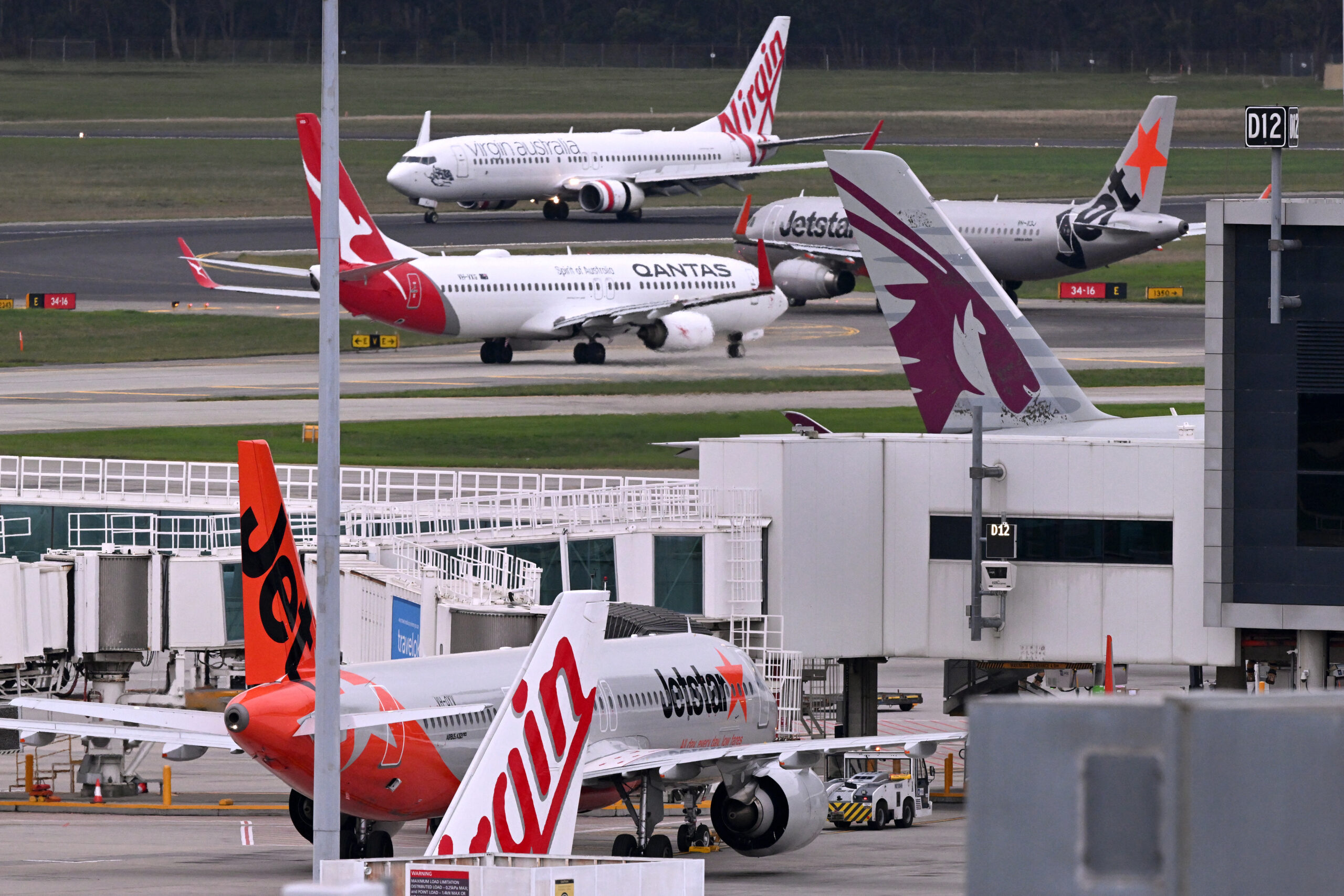
In the skies above Japan, sharp-suited businessmen sit back, loosen their ties and take a sip of champagne as their aircraft climbs to 30,000 feet. At the same time, in a village in Tanzania, a family buzzes around their thatched roof home, their evening meal stewing on the cookstove. These two scenes may seem far apart. But they are linked together thanks to one of the latest schemes in the carbon market.
The Carbon Offsetting and Reduction Scheme for International Aviation (CORSIA) is the airline industry’s response to pressure to address its climate impact. Under CORSIA, developed by the International Civil Aviation Organization (ICAO), airlines are required to monitor and report emissions from international flights. By January 2028 they will need to have emission offsets that exceed benchmarks over the 2024-26 period, through purchasing carbon credits.
First global framework
The scheme marks the first time an international industry has agreed a global framework for tackling its emissions. It is also a major shift from the voluntary carbon market. Rather than purchasing credits for altruistic reasons, airlines will have a regulatory obligation to offset emissions from international flights.
In March Japan Airlines became the first carrier to make a major step towards meeting its CORSIA obligations. Under the scheme, Japan Airlines is meeting its regulatory obligations by paying for Tanzanian families to cook with new, high-efficiency stoves that reduce the need to gather and burn firewood. The emissions avoided by protecting forests in Tanzania thereby help to counteract those released by aircraft jetting out from Japan.
Through a deal with Shell, Japan Airlines retired 180,000 carbon credits sourced from two projects in Africa, including 50,000 credits from a project developed by clean cooking company BURN in Tanzania. To retire a credit means permanently removing it from circulation so that its underlying climate benefit can be claimed by a single entity.
Predictable demand
Douglas Greenwell, carbon commercial director at BURN, says CORSIA can be a “huge catalyst” for carbon projects in Africa.
“What attracts us to CORSIA is that it’s a known-demand market,” he explains. Carbon data company Sylvera estimates that demand in the first phase of CORSIA will reach 177m credits. The level of certainty around demand, in turn, makes it easier for developers to raise investment for new projects.
Greenwell also notes that airlines have been budgeting to spend $18 to $20 per credit under the first phase of CORSIA. Although prices for CORSIA-eligible credits have recently tumbled to $11 per tonne of carbon, the scheme still offers a significant price uplift compared to the voluntary market, where cookstove projects in Africa are currently receiving as little as $2 to $3 per credit. An apparent under-supply of credits also suggests that market fundamentals will push prices to higher levels, particularly as the January 2028 deadline comes into view. Only 32m credits are currently classed as fully eligible for CORSIA.
Impact on airlines
For African airlines, the impacts of CORSIA will be uneven. The rules contain exemptions for flights to or from “least-developed countries” (LDCs) or countries that account for less than 0.5% of international air traffic.
This means that, in theory, only a handful of African countries, including Egypt, Morocco and South Africa, are subject to CORSIA. However, many African countries have decided to waive their exemptions voluntarily.
Ethiopia is a special case. Although classed as an LDC, Ethiopia accounts for a significant share of global air traffic due to the major hub airport in Addis Ababa. As a result, the country will be subject to CORSIA requirements from 2027. Ethiopian Airlines, by far the largest carrier in Africa, is not required to offset emissions from the 2024 to 2026 period, but will have to meet the subsequent deadline to retire credits by January 2031.
The African Airlines Association (AFRAA) said last year that it intended to create a platform to connect African airlines with eligible credit providers, making it easier for airlines to procure the necessary credits.
Even so, the financial burden will be significant. According to the International Air Transport Association, African airlines have an average profit margin of just 1% – compared to the 3.9% global average. Even a small increase in costs will therefore be more difficult for African carriers to absorb.
Lessons from KOKO
For African carbon project developers, participating in the market for CORSIA credits is a major opportunity – but one that is far from straightforward to grasp.
Developers face challenges in complying with the strict standards set by ICAO for credits to be eligible for the scheme. Storm Patel, commercial director at carbon finance and project development company TASC, says that while it is important for ICAO to maintain credibility in the market, the requirements are “probably not” striking the right balance between guaranteeing integrity and ensuring a stable supply of credits.
“In practice, the current system is creating significant bottlenecks that are slowing the development and scaling of supply,” she warns.
“Without more flexibility and faster decision-making processes, there is a real risk that supply – particularly from emerging African markets – will struggle to scale at the pace needed.” Crucially, developers must negotiate a complex set of agreements with host governments before credits can be traded internationally.
One high-profile developer, KOKO Networks, collapsed into bankruptcy in February, after failing to secure a “letter of authorisation” from the government of Kenya. Governments are cautious about providing such letters, since they are then required to make a “corresponding adjustment” to their own carbon targets. This system is designed to prevent carbon reductions being double-counted under both CORSIA and national carbon accounts.
The demise of KOKO has provided “a reality check for the market,” says Ben Rattenbury, vice president for policy at Sylvera.
“Investors, project developers, buyers, airlines, particularly in the context of CORSIA, should not underestimate the challenge of getting the letter of authorisation, plus the insurance or the corresponding adjustment.”
KOKO’s collapse has also made airlines cautious about pre-purchasing credits.
This, alongside uncertainty on EU policy around airline emissions, has been a factor in the recent downturn in spot prices for CORSIA-eligible credits.
The majority of procurement teams appear to be holding off signing major deals in the hope of securing better terms for credits that fully meet letter of authorisation requirements closer to the 2028 deadline.
A $100m opportunity?
Despite the evident growing pains in the market, the potential benefits for both carbon developers and African governments are driving schemes forward.
Several developers have had more success than KOKO in securing letters of approval.
Rory McDougall, chief financial officer at DelAgua, another clean cooking project developer, says the Rwandan government will receive 10% of credits and 5% of revenues from DelAgua’s projects in the country, while in Sierra Leone and The Gambia governments will receive $5 per credit. As a “back of the envelope” calculation, McDougall estimates that if African governments can secure an average of $2 to $3 for each credit sold under CORSIA, the continent would receive more than $100m annually.
Overall, CORSIA and other international schemes under Article Six of the Paris Agreement – the landmark climate change agreement signed in 2016 – are widely seen as a major opportunity to spur growth in Africa’s carbon markets.
“Africa, I would say, probably has the best potential of any part of the world for Article Six, and therefore CORSIA as well,” says McDougall. Clean cooking credits are a particularly strong opportunity, he says, given the potential to provide solutions for around one billion people in the continent that currently lack access.