
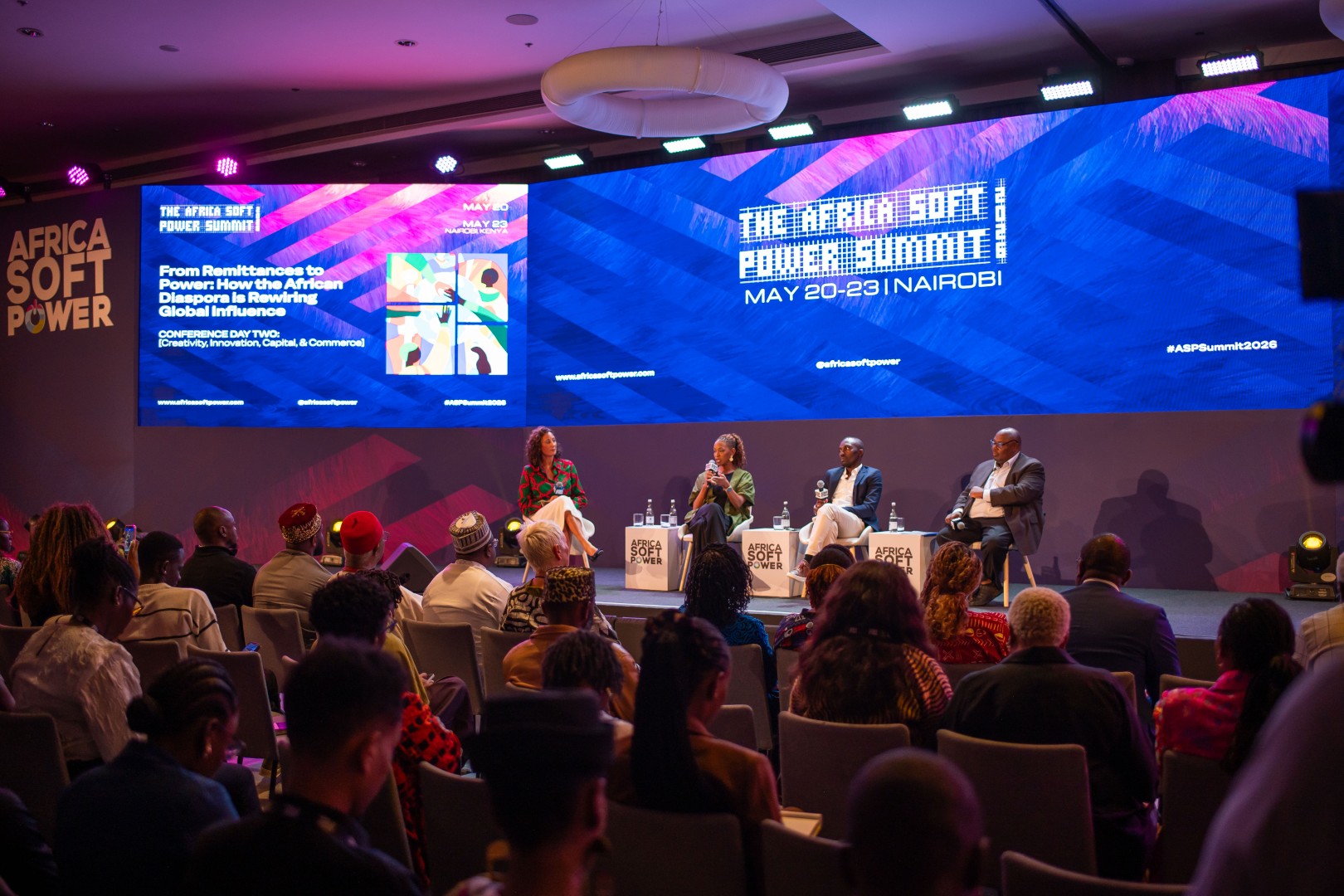
At the Africa Soft Power Summit in Nairobi, leaders examined how the continent can convert its rapidly growing cultural influence into economic power and inclusive growth to support its young, fast-growing population.
They warned that while Africa’s cultural influence is undeniable – spanning music, film literature, sports, media and other sectors – most of the economic benefits do not reach the individuals and communities that generate the bulk of this value on the continent.
The ownership, infrastructure, and capital needed to retain that value at home is still underdeveloped. This often pushes African talent to foreign-controlled firms which inevitably capture most of the profits. Africa gets the recognition and applause, but the financial returns needed to fund the industry’s growth and create sustainable jobs flow elsewhere. Reversing this dynamic and giving Africa real beneficial ownership over its own identity and culture was the key focus of discussions during the two-day summit.
Speaking at the opening ceremony, Ummi Bashir, permanent secretary in Kenya’s state department for culture, the arts and heritage, underscored the alignment between the summit’s vision and Kenya’s cultural policy.
“Culture, heritage and the creative economy are drivers of economic growth and global influence. Culture is not a backdrop to development. It is its foundation, as captured in Article 11 of the Constitution of Kenya,” she affirmed.
Bashir welcomed the summit’s strong focus on Africa’s creative industries, stressing the sector’s proven impact on youth entrepreneurship and employment.
She argued that Africa is “moving from the periphery to the centre” of global influence – thanks in no small part to its cultural exports. She, however, cautioned that despite the rising prominence of African culture, Africans still lacked meaningful ownership over the platforms that shape its global image and narrative. “We should tell our own stories. We are the authors and we should be proud of that.”
Rethinking the role of soft power
Nkiru Balonwu, founder and creative director of the Africa Soft Power Project and the event’s organiser, reflected on the need to rethink how cultural influence is exerted. Cultural power must be wielded in a way that advances Africa’s economic interests, she stressed.
“African influence is not the question. The question is whether that influence will translate into enduring economic power,” she argued. “We are not simply concerned with whether African creativity grows, but with who captures the value, who owns platforms, who controls narratives, who finances ideas early enough, and who benefits when African culture, talent and innovation become globally valuable.”
Balonwu said a fragmented approach continues to limit how much of the value generated by African creativity is retained on the continent. “We still have a fragmented approach. Countries and regions that shape the world align capital with culture, talent with markets, innovation with ownership.”
She emphasised the role of soft power and human relationships in shaping favourable economic and political outcomes. “Power not only moves through governments and institutions, but also through networks, trust and proximity.”
Zainab Hawa Bangura, under-secretary general and director general of the United Nations Office in Nairobi, noted that a shift was underway in how states view and wield soft power.
“Power is no longer merely measured by GDP, military strength, or natural resources, but increasingly by the ability to shape narratives, inspire ideas, drive innovation, mobilise people, and build partnerships around a common vision. This is the essence of soft power,” she noted.
Citing Africa’s runaway success in areas like Nollywood, Afrobreats, fintech, climate leadership and digital entrepreneurship, she noted that the continent was shaking off old stereotypes.
“Outdated narratives centred around dependency, crisis and vulnerability are giving way to a far more accurate reality. We are actively reshaping global culture, commerce and innovation,” she stated.
Giving women a fairer chance
The summit featured a series of panel discussions dedicated to women’s leadership. In one session, Uche Ofodile, chief executive of MTN Benin, urged private‑sector organisations to create space for women to rise to the highest levels of business leadership.
Ofodile stressed that diversity and inclusion must be treated as a strategic imperative rather than a token gesture. “It is not a nice-to-have, but leads to better performance”, particularly in areas like the telecoms industry where “women still remain underrepresented.”
“Leadership determines what gets seen in an organisation.What they deem to be important is what gets prioritised. Diversity and inclusion ensures that the information that leaders get is solid. Inclusive leadership teams make better decisions, better connections and that leads to better performance.”
Speaking in a separate session, Wangari Kebuchi, founder and managing director of consulting firm Expertise Global, argued that African governments must move beyond political declarations and allocate more resources to women’s empowerment.
“Where are governments investing in? If you look at many countries across Africa its infrastructure. That is fantastic but many times it is at the expense of investment in health, social protection and education, all sectors that benefit women. That is where we are seeing the gaps, she said.
Kebuchi, a public financial management expert, urged governments to view spending on women‑empowering sectors as investment, not charity. “Diversity is not about giving out free lunch. Women bring value. There is a multiplier effect when they are empowered to deliver their best.”
Eme Essien Lore, Co‑Founder of Wealth4Impact and Senior Advisor at ESG Africa, encouraged female entrepreneurs to actively pursue funding to scale their ventures.
“It is true that the greatest barriers that African women face is that of accessing capital. However, things are changing. There is an environment right now where investors are actively looking for women-led businesses,” she said.
She advised founders to begin fundraising within their immediate networks before approaching larger investors. “VCs typically look for companies that have had a lot of support from family, friends…it sends a powerful signal around trust.”
Fashion entrepreneurs share secrets to success
At the summit, female fashion entrepreneurs delved into the opportunities and challenges facing women founders in the industry. Rukky Ladoja, founder and creative strategist at Dye Lab, a fashion and lifestyle brand based in Lagos, argued that women entrepreneurs remain hesitant to take big risks because society still penalises female failure more harshly.
“We need to allow women to make mistakes as much as possible. We are in a space where we have to overcompensate and work twice as hard to succeed – and when we fail nobody sees it as part of a learning curve, but as a catastrophic event.”
Ladoja said that despite “many mistakes” with previous ventures, she eventually succeeded in getting her brand off the ground. Growth has thus far been encouraging, she shared.
“How do we know we have been successful? There are copies [of our work] everywhere. It is annoying and frustrating but it shows that what we pioneered is catching on.”
She noted that the rise of brands like hers is inspiring more young entrepreneurs to turn their fashion hobbies into viable businesses. “There is demand within the continent. Young people are seeing the potential and getting involved.”
Highlighting the sector’s promise, Wandia Gichuru, CEO of Vivo Fashion Group, reflected on her entrepreneurial journey and the vision behind her brand.
“Our vision is to see an Africa that is dressing herself. We are not as interested in being on the runways as being in the closets.”
“That may not be as big a challenge in West Africa, but in East Africa we tend to dress very European or to wear predominantly second hand clothing,” she explains.
Gichuru said Africans themselves have a crucial role to play in elevating local fashion brands by choosing them over global substitutes.
“Consumer choices are powerful. Our own mindsets about ourselves matter. We must recognise how powerful we are. Every choice we make is a vote towards something.”
But she added that African designers must also compete on quality and value. This, she stressed, is the only sustainable way of building brand loyalty over time.
“We should not be buying African brands simply because they are African. We should be able to compete. There should be enough of us at all price points and in all market segments.”