
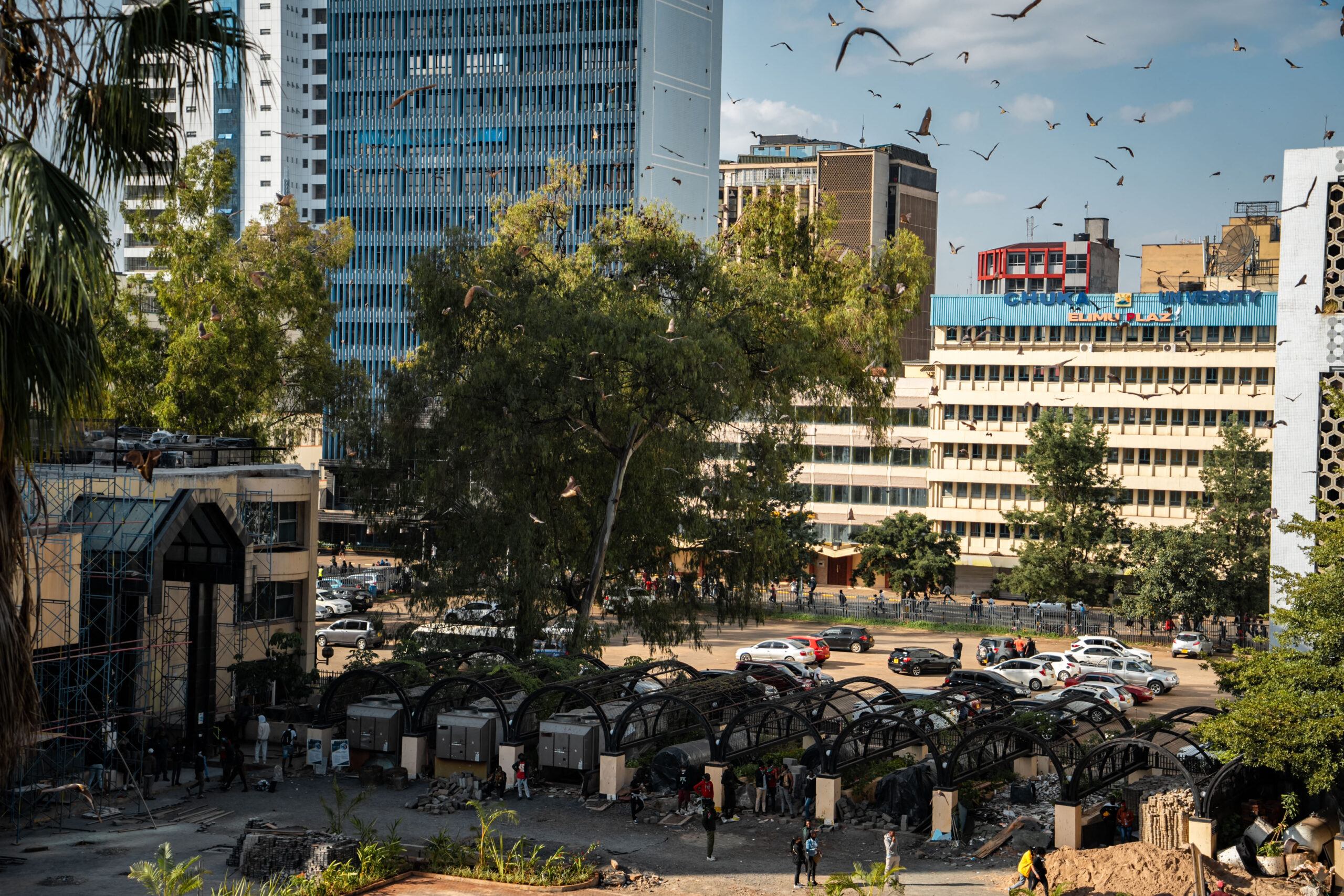
Trade and investment will top the Africa Forward Summit agenda, reflecting France’s attempts to anchor its African diplomacy in commerce. The first day of the Africa Forward summit will feature a business forum that will highlight the breadth of France-Africa economic partnership and promote projects and initiatives conducted in African and French private sectors.
“Our priority is clear: to step up investments and strengthen our cooperation programmes in healthcare, education, food, digital technology, energy and infrastructure. In Nairobi, some 1,500 economic stakeholders will be mobilised to transform ambitions into projects and projects into results,” Macron said.
“We are making a strategic choice in ensuring the private sector is the driving force behind this new momentum,” he added.
There will be several special events during the forum focused on young people and sectors of excellence that generate jobs and build cohesion, including sports, cultural and creative industries.
The second and final day will be devoted to development finance and global issues. Youth employment and training, sovereignty and competitiveness will be at the core of discussions. The Summit will also discuss peace and security in support of African mediation and African Union action.
Financial reform on the agenda
Global financial reform will also be under discussion at the Africa Forward Summit in preparation for the G7 Summit, which France will host in Evian from 15 to 17 June. “The Nairobi summit will be a moment of truth in the lead-up to the G7 Summit in Evian,” Macron said.
He pledged to use both the Nairobi summit and the G7 meetings as platforms to drum up support for increased African involvement in global decision making. “Africa must be fully involved in global decisions…that is why we are spearheading an ambitious reform of international governance, for a fairer, more representative and more effective multilateralism.”
Success hinges on tangible outcomes
The Nairobi summit will focus on reforming the international financial architecture to secure fairer African representation in global economic governance and enhance access to sustainable financing.
Other priorities include leveraging African solutions for the energy transition, advancing green industrialisation, unlocking the blue economy, boosting high‑value agriculture, harnessing artificial intelligence and rethinking global health systems.
President William Ruto expressed confidence that the summit would mark a decisive turning point in France‑Africa relations.
“This high‑level gathering reflects a renewed and forward‑looking partnership between Africa and France, grounded in mutual respect, shared responsibility and a clear commitment to delivering tangible outcomes,” he said.
“Together, we are deliberately moving beyond legacy narratives and toward a relationship defined by co‑creation, co‑investment and measurable impact. One that recognises Africa not as a frontier, but as a partner and a driver of global growth. The true measure of this Summit will not be the conversations we hold, but the outcomes we deliver for our people,” he said.
Despite the optimism from Presidents Macron and Ruto, opinion remains divided on how achievable some of the summit’s ambitions really are. For example, progress on reforming the international financial architecture has been slower than many hoped, and questions persist over whether greater African representation in global institutions can actually translate into real influence.
This issue is perhaps most evident in the governance of the International Monetary Fund (IMF).
Africa accounts for 54 of the IMF’s 190 members – more than any other region – and has undertaken the highest number of IMF programmes between 2000 and 2023, accounting for nearly 47% of all interventions. Yet the continent holds just 6.5% of voting shares, the lowest of any region apart from Oceania.