
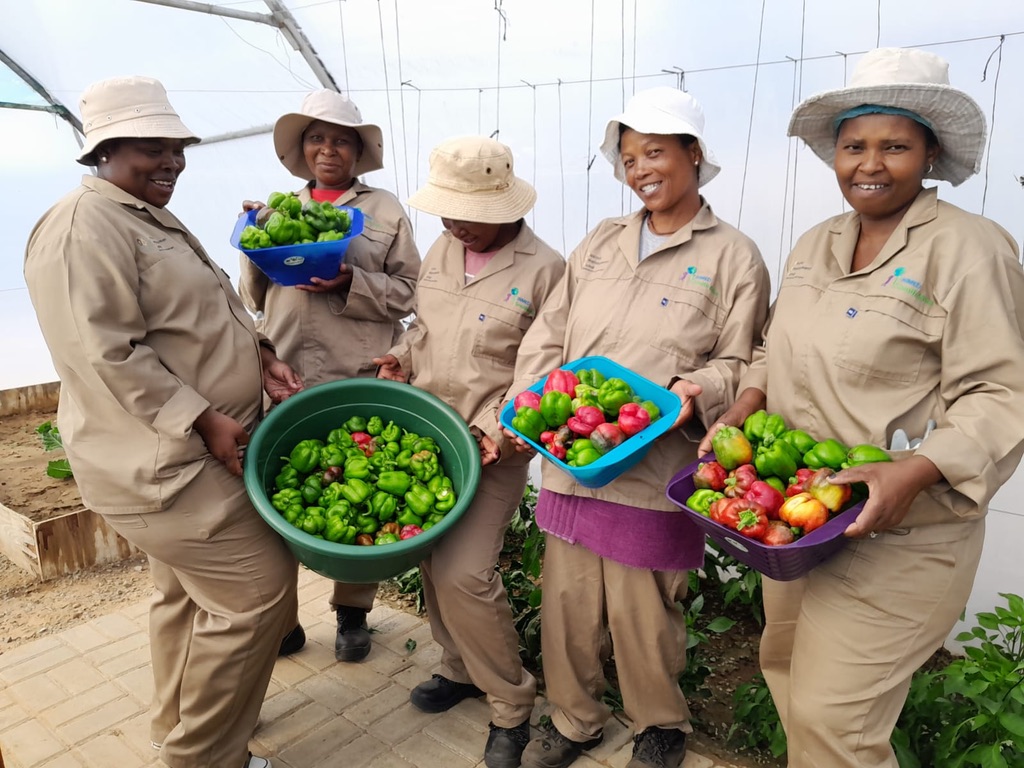
Many communities across South Africa continue to experience limited access to affordable, nutritious food, while droughts, floods and extreme weather place additional strain on local agriculture and food production. In this environment, we can no longer afford to think about agriculture only in terms of large-scale commercial farming. We must invest in resilient and climate-smart systems that enable communities to produce food closer to where it is needed most.
At INMED South Africa, aquaponics offers one practical and scalable solution. For more than a decade, we have worked in schools, townships and rural communities to refine low-cost aquaponics systems designed specifically for resource-constrained environments. These durable installations can fit into schoolyards, community centres and even household plots, making climate-smart food production more accessible at community level.
Aquaponics combines fish farming with soilless vegetable production in a closed-loop, recirculating system. Fish waste provides nutrients for crops, while the plants naturally filter and clean the water for the fish, with a small pump keeping the cycle moving continuously. The result is an efficient system capable of producing both vegetables and protein year-round while using significantly less water than conventional farming.
The real impact of aquaponics, however, comes from how it strengthens local capacity and enables communities to participate directly in food production.
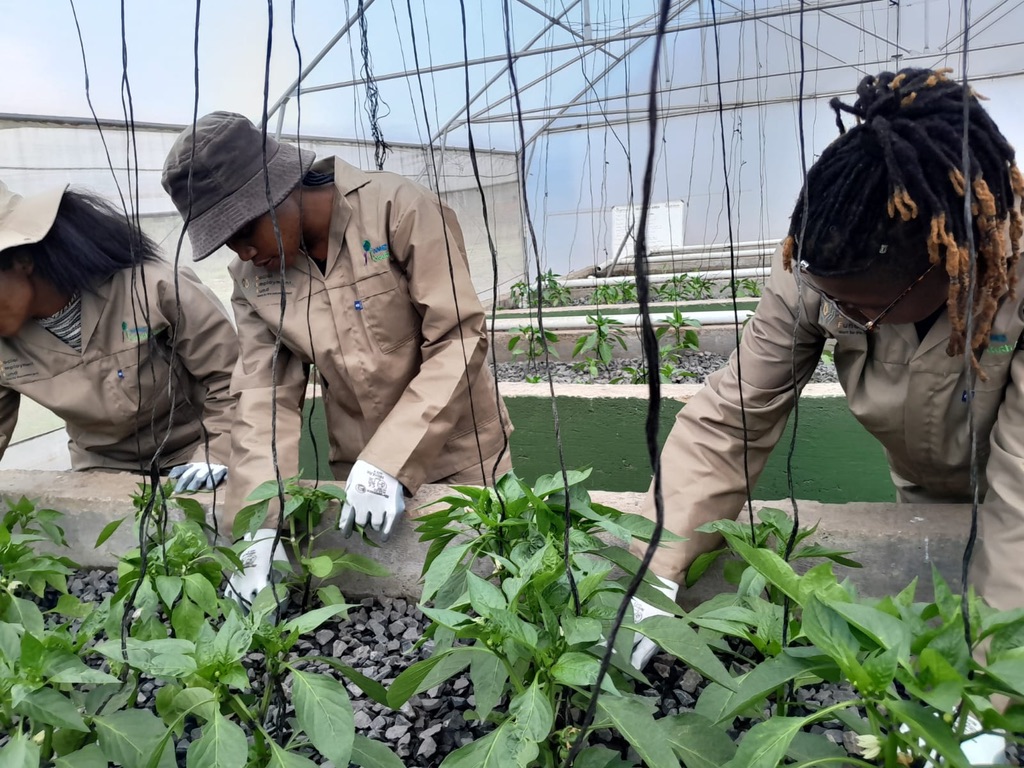
Across South Africa, our systems are transforming schools into local food hubs and living classrooms. Teachers and learners manage many of the day-to-day activities within the systems, gaining hands-on agricultural and business skills in the process. Food-handlers are also trained to support school nutrition programmes, helping improve access to fresh and nutritious food for children who may rely heavily on those meals each day.
Parents and educators are also trained to manage systems independently, helping to build local ownership and long-term capacity rather than reliance on one-off interventions. In many communities, parents and community members have been supported to become small-scale producers, creating pathways for income generation, entrepreneurship and broader local economic participation. These systems also create opportunities for women-led cooperatives and household-level food production, particularly in communities where economic opportunities remain limited.
Some of our cooperative projects have increased production by as much as 300%, with communities becoming reliable suppliers of fresh produce and fish to schools, local retailers and surrounding households. In areas where unemployment remains critically high, this matters enormously.
A key part of INMED South Africa’s approach is ensuring resilience and accessibility. Our systems are designed using readily available materials and a straightforward ebb-and-flow approach suited for low-resource environments. By avoiding expensive filtration and aeration systems, the model becomes more affordable to operate, easier for schools and communities to maintain independently, and more resilient in the face of South Africa’s challenging weather conditions.
These systems are also designed with climate resilience in mind. In a water-scarce country like South Africa, aquaponics offers an important advantage by using up to 90% less water than conventional farming because the water is continuously recirculated. The systems can also operate in small spaces, making them practical for urban and peri-urban communities where land availability is limited. By positioning systems within school grounds and community centres, fresh produce and fish become hyper-local, reducing transport and logistics barriers while strengthening community food access.
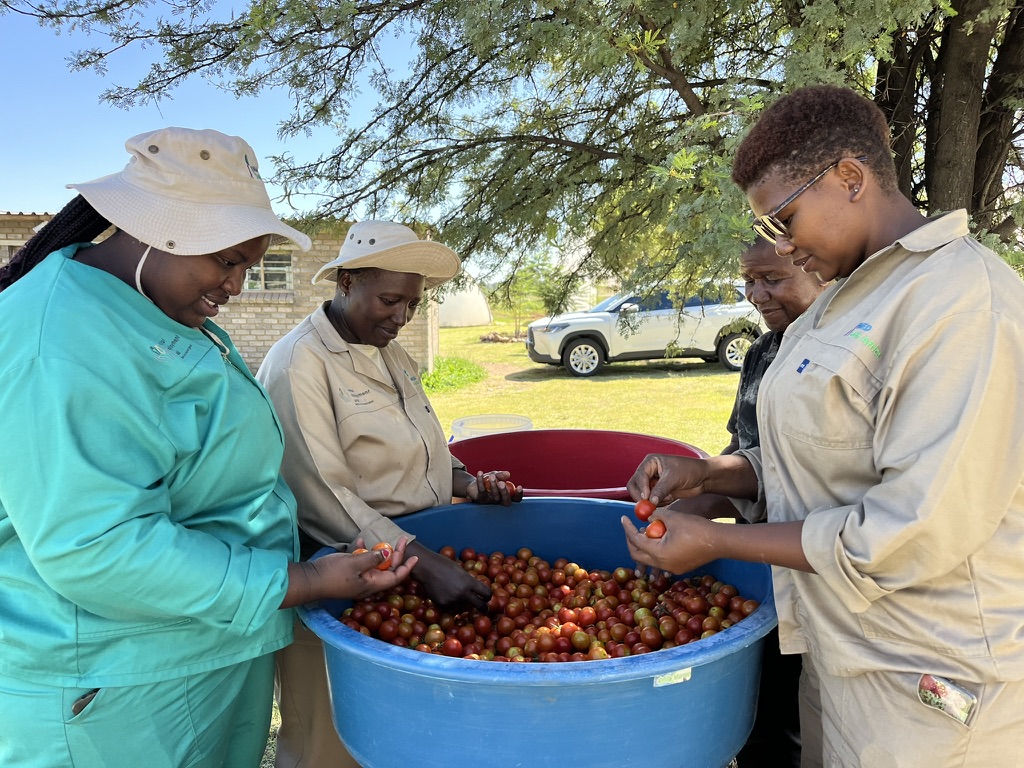
What makes this approach significant is that it is already being implemented successfully in schools and communities across the country.
More than 158,000 people have benefited from INMED South Africa’s adaptive agriculture and aquaponics initiatives to date. What we have seen repeatedly is that when communities are given access to the right tools, training and support, they can build sustainable local food systems that are both economically viable and environmentally responsible.
Recognition matters, such as being shortlisted as a 2026 finalist for the Zayed Sustainability Prize, the UAE’s flagship award for innovative organizations, schools, and SMEs delivering impactful solutions in sustainability, climate action, health, food, energy, and water, where as a finalist we were awarded $100,000. Beyond the recognition itself, it reflects growing global interest in community-led, climate-smart agriculture as an important part of future food security solutions. With submissions for the next round of the Prize now open, there is an opportunity for more African innovators and organisations to showcase locally driven solutions that are creating measurable impact.
Africa’s food challenges cannot be solved through emergency aid alone. We need long-term investment in systems that strengthen local production, reduce dependence on volatile global supply chains and create opportunities for young people and women to participate meaningfully in the green economy.
Recent global disruptions have highlighted how interconnected food systems have become and why strengthening local production capacity matters. For Africa, building resilient and community-led food systems is about creating long-term sustainability and economic opportunity. The solutions already exist. What is needed now is scale, partnership and political will.
If we are serious about combating hunger, unemployment and climate vulnerability, then we must support innovations that empower communities to feed themselves sustainably. Aquaponics is not the only answer, but it is proving to be one powerful part of the solution.
By strengthening local food production and community ownership, Africa can build food systems that are more resilient and inclusive for future generations.