

Demand for quality healthcare services in Africa is rapidly rising. The continent accounts for roughly 25% of the global disease burden and is home to the world’s youngest and fastest-growing population. Yet the cruel irony is that despite Africa’s immense healthcare needs, a large share of its population, over 600m by some estimates, cannot afford or access essential healthcare services. The continent has the largest healthcare access gap of any region worldwide, with rural communities and lower-income households disproportionately impacted.
What ails the sector?
Unequal access to healthcare in Africa is largely the result of two structural failures: low health insurance coverage and over-stretched public health systems.
Estimates of the proportion of Africa’s population covered by health insurance or social health insurance range from 17% to 24%, leaving the majority to pay for care out of pocket. This imposes steep economic costs as affected households often have to reduce consumption to cope, while some are pushed below the poverty line when the cost of care exceeds their financial capacity.
Cases of families depleting savings, selling assets and incurring debts to support loved ones in need of specialised care for chronic illnesses and medical emergencies are not uncommon. According to the World Health Organization (WHO), Africa accounts for over 20% of the world’s population facing financial hardship due to health costs, and nearly a quarter of global health-driven poverty.
“Out-of-pocket payments still dominate health financing in much of our region. In 31 member states, they account for more than a quarter of all health expenditure; in 11 countries, more than half; and in two countries, more than 70%,” says Mohamed Janabi, WHO regional director for Africa.
“These financial pressures force families into impossible choices, between care and food, between medicines and school fees, between dignity and survival,” he said in a message marking Universal Health Coverage Day in December.
Paying directly for healthcare can also negatively impact treatment outcomes, Janabi notes, because the cost of care remains a barrier that determines whether patients seek treatment, delay it, or forgo it entirely.
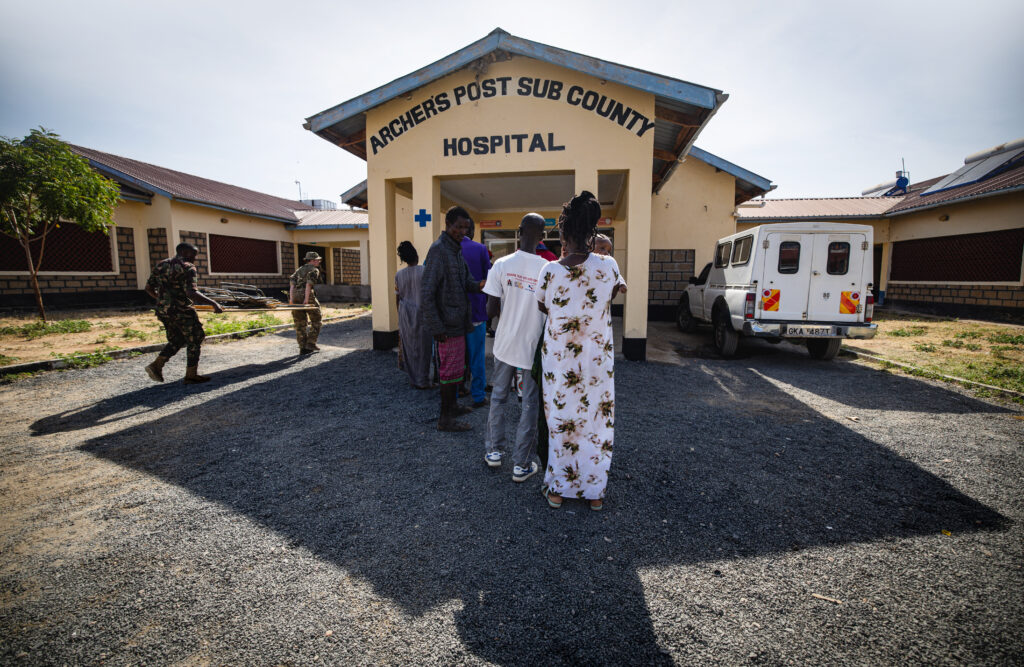
Meanwhile, Africa’s public health systems are chronically underfunded and as a result understaffed and under-equipped – it is not unusual for essential drugs and medical supplies to run out in public facilities. These less-than-ideal conditions undermine service delivery, lowering the overall quality of care that patients can expect from public facilities. Private clinics, though better resourced and more reliable, are unaffordable for the majority.
The WHO recommends at least $249 per capita in public spending on health as the minimum required to deliver basic services, yet between 2012 and 2020 only eight of 47 countries in the WHO African region met this threshold. Moreover, the Abuja Declaration of 2001, in which African leaders pledged to allocate 15% of national budgets to health, remains largely unmet as governments grapple with higher debt obligations and fiscal pressures.
Foreign aid: a remedy with negative side-effects
It may seem improbable, but Africa’s key health indicators have improved in recent decades despite the daunting challenges. Life expectancy has risen, maternal and child mortality have declined, HIV, tuberculosis and malaria deaths have fallen, and vaccination rates have climbed. Life expectancy, as an example, rose from 46 years in 2000 to 56 years in 2019, while under-five mortality declined by 35% over the same period. Malaria deaths meanwhile declined by 33% between 2000 and 2020. Much of this progress has been underwritten by foreign donors, led by the United States and European governments. The US has long been the single largest supporter of the WHO, the Global Fund and Gavi, the vaccine alliance – all organisations whose work disproportionately targets Africa. Until its dismantling under President Donald Trump, USAID alone provided more than $5bn annually in health assistance to sub-Saharan Africa, making it the region’s biggest bilateral donor.
Donor financing has helped fill critical gaps that African governments could not deal with. It has also, however, created a cycle of dependency that has proved to be a double-edged sword in the wake of massive aid cuts in the US and Europe.
Nigeria, for instance, lost over $600m, more than 20% of its annual health budget, when USAID support was withdrawn. Botswana, meanwhile, had relied on US funding for a third of its HIV response before the decision to dismantle USAID.
“Development assistance for health in Africa has fallen from a high of about $25.8bn in 2021 to an estimated $13bn in 2025. That is not a reduction, that is a collapse,” says Githinji Gitahi, group chief executive of Amref Health Africa, an international health non-governmental organisation (NGO) headquartered in Nairobi.
“But let me be honest about something that people sometimes find uncomfortable. Aid is not charity. Aid has always been a strategic investment by donor countries to protect their own interests,” he tells African Business.
“What we are witnessing now is a recalibration of those interests. And the lesson for Africa is unmistakable. We must take ownership of our health future. We simply cannot outsource the health of our people to the policy cycles of another country. It is not sustainable and, frankly, it never was.”
Washington’s new playbook
The US is not retreating entirely from global health, but rewriting the rules of engagement. Under Trump the US has signed a slew of bilateral agreements on global health cooperation with more than a dozen African countries under the “America First Global Health Strategy”.
A key feature of these agreements is that the US will bypass NGOs and development agencies, which have historically been the primary channels for delivering US aid in Africa. Washington will instead work directly with African governments to deliver assistance to local populations. Crucially, the US will no longer fund programmes in full. African states are now expected to shoulder some of the burden by co-investing their own resources in joint initiatives.
The agreements govern health spending commitments by the US and recipient countries between 2026 and 2030. In the agreements signed so far, Nigeria emerges as the single largest recipient of new financing, although it will cover 59% of the $5.1bn committed. It is followed by Kenya ($2.5bn, with 34% co-investment), Uganda ($2.2bn, 23%), Mozambique ($1.9bn, 4%), Ethiopia ($1.5bn, 31%) and the Democratic Republic of the Congo ($1.2bn, 25%).
South Africa, however, has seemingly been excluded, in a move widely read as a retribution by Washington for Pretoria’s foreign policy positions. The US State Department said in a statement that its new approach is designed to curb inefficiency, end waste and break the cycle of dependency. “Bilateral agreements will require recipient governments to co-invest in these efforts and include performance benchmarks that must be met in order to release future US health foreign assistance funding,” it said.
“Partner governments will increase their domestic health expenditures over the agreement period, a critical step in ensuring partner governments have the resources they need to sustain their health response long-term without support from the US government.”
The US has also committed to supporting the scaling up of recipient governments’ health data systems to ensure key programmatic data for HIV, tuberculosis, malaria, polio and disease outbreaks can be tracked at scale and in the long term. This provision has sparked controversy in some countries, with critics raising questions over patient data privacy. In Kenya, petitioners have gone to court to block the deal, with the High Court in December suspending data sharing until the case is resolved.
“The new bilateral memorandums of understanding tie health aid to conditions, including providing the US with rapid access to information on emerging infectious diseases. That is transactional, and African governments must negotiate these agreements with open eyes and strong negotiating positions,” Gitahi says.
Business tie-ins
But the US deals could be transactional in other ways. In late February, Reuters reported that the Zambian government was pushing back on the terms of a proposed five-year $1bn health deal with the US (to be co-financed by Zambia to the tune of $340m).
The draft agreement reviewed by Reuters outlines how the deal will be terminated and funding discontinued if Zambia and the US fail to agree by 1 April on a “bilateral compact” proposed by US secretary of state Marco Rubio to Zambian President Hakainde Hichilema on 17 November 2025. Three sources told Reuters that that compact was tied to mining collaboration.
NGOs have communities’ trust
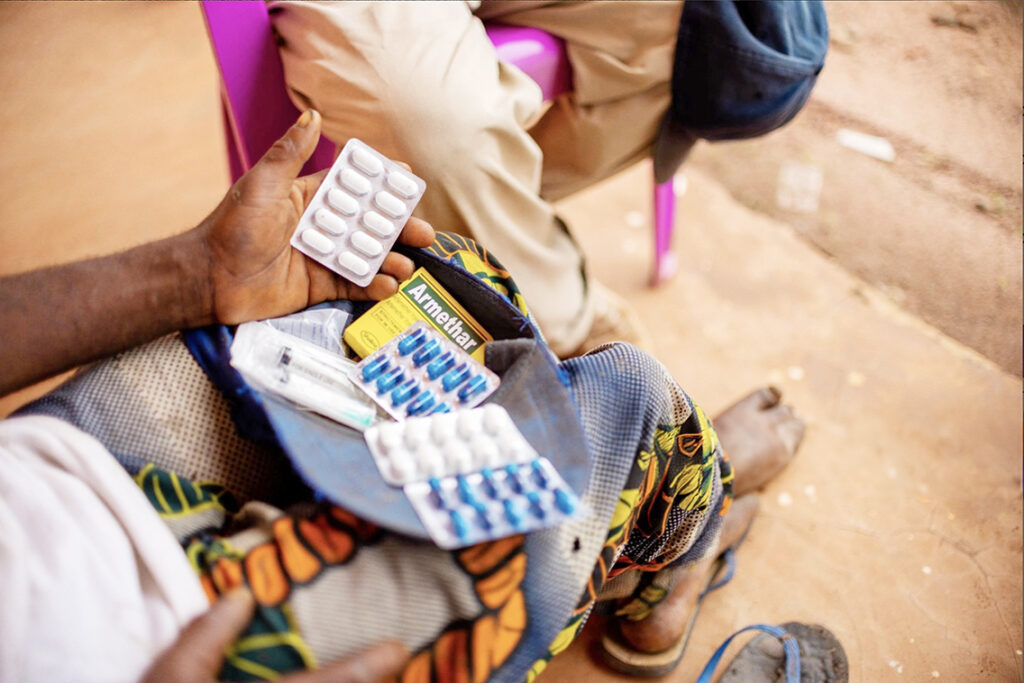
Moreover, Gitahi warns that the US move to sideline NGOs may prove counterproductive in regions where last-mile delivery is a challenge for governments. “The risk is that bypassing NGOs and civil society organisations removes the very actors who have built trust with communities over decades.
“Governments alone cannot deliver healthcare to the last mile. Community-based organisations, faith-based health networks, NGOs – these have the reach and the relationships that ministries of health often simply do not have.”
Still, he is not entirely sceptical about the US’s new strategy. Putting more responsibility for delivery in the hands of governments, he argues, could help catalyse much-needed reform of Africa’s public health system.
“The opportunity I see is that this forces a long-overdue conversation about sustainability. If governments are now the primary recipients of support, then they must build the systems, the accountability frameworks and the domestic financing mechanisms to manage these resources effectively,” he says.
Tackling rising non-communicable diseases
Gitahi contends that the “most under-appreciated crisis” facing African health systems today is the sharp rise in non-communicable diseases (NCDs) such as hypertension, diabetes, cancer, obesity and mental health disorders. “NCDs accounted for 37% of all deaths in the WHO African Region in 2019, up from 24% in 2000. Today, 50% of all admissions in a typical African hospital are for NCDs, yet 80% of NCD care is paid out of pocket,” he notes. “The tragedy is that our health systems were built, largely with donor support, around vertical disease programmes for HIV, malaria and tuberculosis. Those programmes have saved millions of lives, and we should be proud of that.”
“But they were never designed to handle chronic conditions that require lifelong management, screening and prevention. And so, Africa faces a very real risk of health system collapse in the next few years because of NCDs, if we do not fundamentally change our approach,” he adds.
He says that “sin taxes” on products whose consumption is linked to these conditions are long overdue. “Governments must introduce taxes on unhealthy products like tobacco, alcohol, sugary beverages and ultra-processed foods and ring-fence that revenue specifically for NCD prevention. This is not radical policy, but evidence-based. It simultaneously reduces consumption and generates the resources you need.”
“Governments must have the courage to regulate the food and beverage industry, enforce advertising restrictions, mandate nutritional labelling and invest in health literacy at the community level. Prevention is always cheaper than treatment, and in a resource-constrained environment, it is the only sustainable path,” he adds.
Strengthening primary healthcare
Gitahi notes that health systems in Africa are overly top-heavy. More resources are typically allocated to large hospitals and curative treatment, while local clinics, dispensaries and community health workers are often overlooked – despite serving as the first point of contact for the majority of the population. Governments, he argues, should redirect more resources towards primary healthcare and frontline workers. “We inherited colonial-era health systems designed around hospitals and disease treatment, and we just keep pouring money into that model; 80% of our people seek care at the primary level, yet the bulk of our spending goes to tertiary facilities. That is upside down.”
He notes that channelling more resources to primary care will accelerate Africa’s transition from “consumption care to health production”.
Health production means “redirecting investment to primary healthcare and prevention, to clean water, sanitation, nutrition, girls’ education, because these are the upstream determinants that keep people healthy and out of hospitals in the first place… We must shift from reactive, hospital-centric care to systems that prevent disease, promote health and empower communities to take charge of their own wellbeing,” he explains.
Gitahi argues that the precarious employment status of community health workers is one of the biggest challenges facing primary healthcare systems in Africa. Despite being on the frontlines of healthcare delivery in the community, most of them serve as unpaid volunteers.
“If we formalise them, train them, equip them and pay them as a recognised cadre, we can dramatically expand coverage,” he says. “Not to replace skilled health workers, but to improve health and reduce the disease burden that our skilled workforce has to deal with,” he says.
Investing in the workforce
The WHO African Region had an average density of 26.8 health workers per 10,000 people in 2022, far below the globally recommended threshold of 44.5. Overall, Africa has around 5.1m health workers, or just 3% of the global health workforce, which is hardly sufficient for a region with the world’s highest disease burden.
Gitahi notes that this underlines the need to massively expand training capacity, particularly for mid-level staff such as nurses, clinical officers and community health workers who deliver the bulk of primary care. But he cautions that the responsibility does not rest solely with universities and training institutions. Governments must also create sufficient opportunities to absorb trainees and graduates.
“A paradox that really frustrates me is that one in three health workers in Africa is unemployed while the continent desperately needs them. The problem is not supply, but the system’s inability to absorb and retain the workforce it produces,” he says.
Frequent labour disputes over pay and working conditions also mean that those who secure employment in the public sector often have one foot out of the door, with many seeking opportunities abroad where salaries and working conditions are far better.
Gitahi says this has compelled Amref International University, which was established by Amref Health Africa in 2017 with campuses in Nairobi and online courses, to rethink its training model. “We have had to re-purpose our training to ensure our trainees have labour mobility globally.”
“We need to be honest. You cannot ask a young doctor to stay when they earn a fraction of what they would abroad, and work in facilities without basic supplies. Retention requires competitive compensation, clear career progression, supportive working environments and real investment in rural and under-served postings,” he says.
“Countries must also negotiate ethical bilateral agreements on health worker migration, so that we are no longer talking about ‘brain drain’ but about equitable health workforce mobility.”