For centuries the story of classical music has predominantly been told as a European one. Bach, Mozart and Beethoven form the backbone of concert programmes across the world (perhaps also including artists like Tchaikovsky or Haydn) whereas music from other countries or nations has often been treated as peripheral on the Western stage.
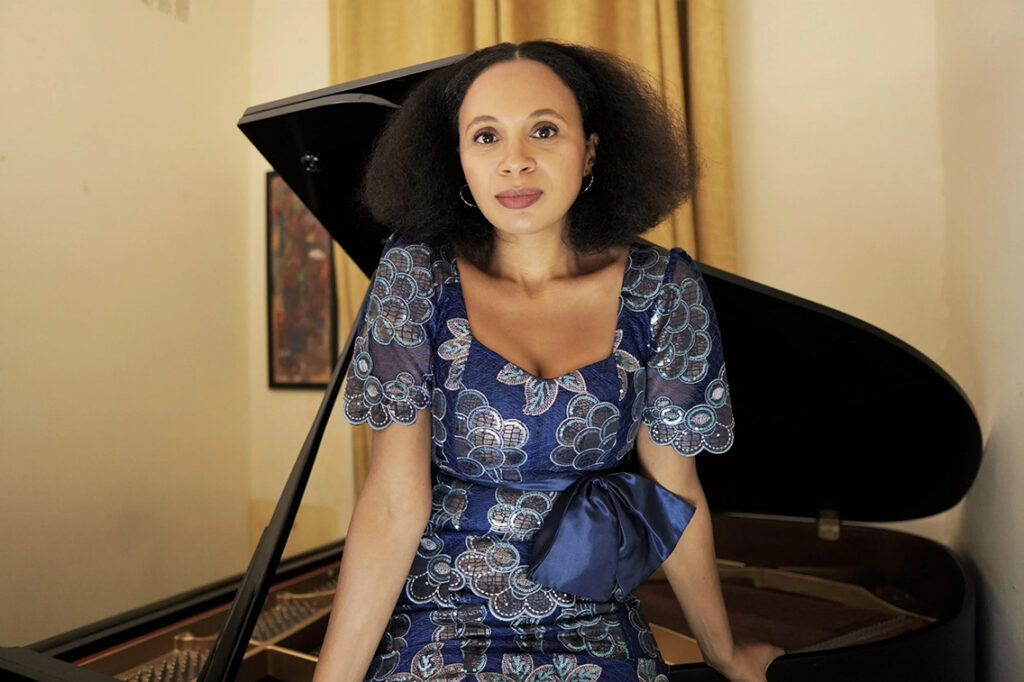
Yet the narrative is beginning to shift, and Nigerian pianist and curator Rebeca Omordia, one of a growing number of African performers and composers helping to reshape what the classical canon looks like in the 21st century, is at the forefront of the change.
As Omordia explores in an interview with Classical Music Magazine, the traditional repertoire of classical music overlooks a vast body of music written across Africa and the wider diaspora. The issue is not a lack of composers or created works – simply the fact that much of this music has rarely been included in mainstream concert programming.
Into the classical conversation
Determined to challenge this narrative, she created Wigmore Hall’s African Concert Series in London, now in its eighth consecutive year championing the work of African composers. This year it coincides with the 125th anniversary of the Wigmore Hall. The concerts have shone a spotlight on a rich repertoire of African compositions and choral works, many of which remain unfamiliar to Western audiences,
placing African composers firmly within the broader classical conversation.
“African classical music can share the stage with the greatest European composers,” says Omordia. “It is not a competition… the European repertoire is not endangered.” Instead, she explains, her goal is to enrich and expand the canon of classical music by bringing previously overlooked artists to the table and broadening the genre’s reach.
Each series introduces audiences to new African instruments rarely heard on Wigmore Hall’s stage, such as the ọjà (the flute of the Igbo people of Nigeria), the kora (the West African harp lute) and the nyatiti (the Kenyan plucked bowl yoke lute). They are performed by musicians who grew up in a society where knowledge is passed on aurally and orally from one generation to the next.
Throughout the 20th century schools of thought on African art music emerged in West Africa with the aim of preserving and formalising African musical traditions. These include Nigerian composer and organist Fela Sowande, whose works combined Yoruba melodies and rhythms with European orchestral and organ scores, and Akin Euba, who reimagined the piano as an instrument to express African rhythmic and melodic languages. Both composers’ works have since been featured in Omordia’s African Concert Series, bringing their voices back onto the concert stage.
Each performance treats the audience to a tapestry of regional musical traditions that is as broad as the African continent itself. The series has included piano music from Ethiopia, North African chamber music encapsulating Moroccan melodies and Algerian rhythmic compositions that draw on oral storytelling traditions. For Omordia, programmes like these demonstrate that African music is not simply an offshoot of European classical forms, but a sophisticated tradition in its own right.
Another musician playing a key role in bringing African classical music to international audiences is Ethiopian pianist and composer Girma Yifrashewa. His compositions blend the European classical canon with Ethiopian musical traditions, and his work has earned him a remarkable global career.
In 2025 he received the prestigious BraVo International Music Award, and in his award speech, celebrated the win as a milestone for Ethiopia and the broader African classical music landscape. “Being selected to represent Ethiopia… is a testament to the growing appreciation of our contributions to the world of classical music,” he said.
Yifrashewa played the krar, a traditional harp-like Ethiopian string instrument, from a young age, but didn’t start playing the piano until the age of 26, due to their scarcity in Ethiopia. After he graduated from the Bulgarian State Conservatory the Irish Christian Brothers shipped a Petrof piano to Ethiopia for him as a gift.
The experience left a lasting impression on Yifrashewa, and today he is committed to ensuring that young musicians do not face the same barriers he once did. Working with the Pharo Foundation, he has supported initiatives to bring instruments and musical education to students in remote parts of Ethiopia. A piano was recently transported to a girls’ boarding school in the Benishangul-Gumuz region, giving students the opportunity to learn an instrument many had never seen before.
For Yifrashewa, these initiatives are a way to open doors for the next generation to learn classical music, to explore, create and ultimately reshape and diversify a tradition long dominated by European musicians.
Composing while black
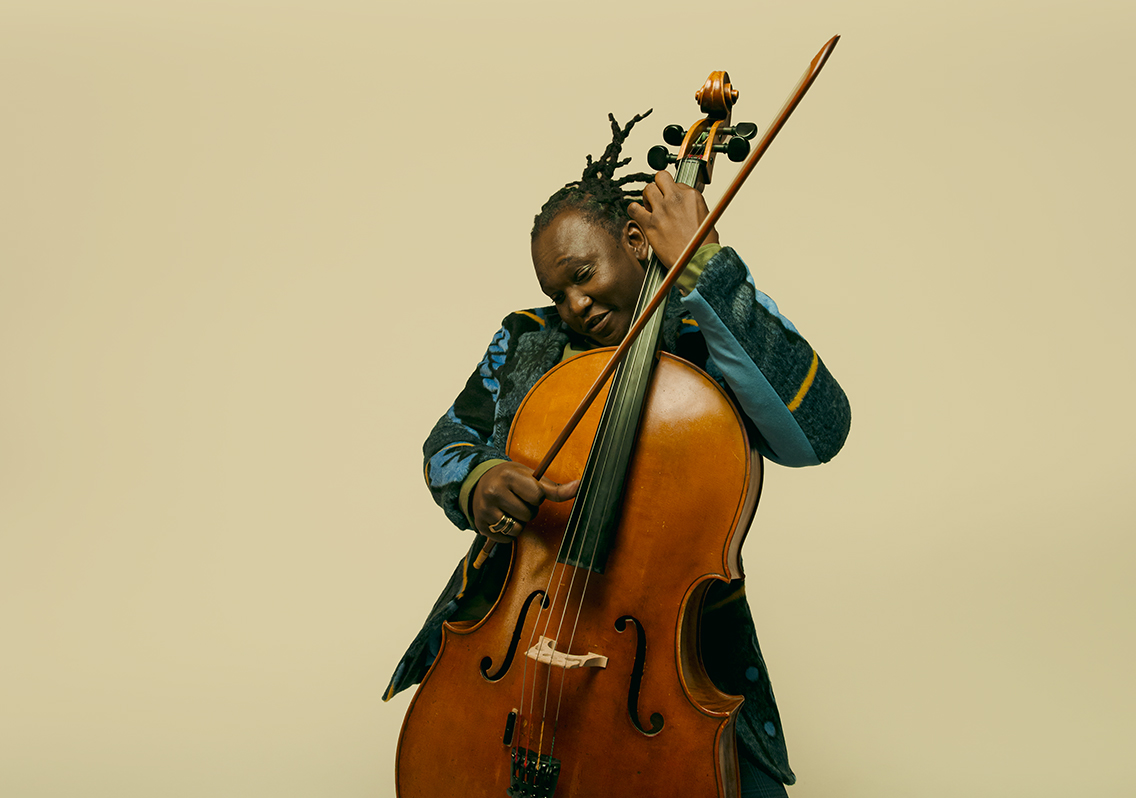
South African cellist and singer Abel Selaocoe is fresh from his residency as artist in focus for the Deutsches Symphonie-Orchester Berlin (DSO). From 19 to 22 March he performed four concerts across Berlin, as part of the DSO’s series Afrodiaspora – Composing While Black.
The series opened with a solo performance, Spirit of Ntu, in which Selaocoe drew on the Bantu concept of ntu – universal life energy – to create a programme that brought together South African musical traditions, the heritage of the Khoisan people and the sounds of the Tanzanian Wagogo people with improvisation and his own compositions.
Over the following days he premiered These Righteous Paths, a cello concerto written for him by American composer Jessie Montgomery, and played it again in a performance framed by Debussy’s Prélude à l’après-midi d’un faune and Stravinsky’s The Rite of Spring, placing Selaocoe’s contemporary performance firmly within the wider classical orchestral tradition.
Last summer Selaocoe and his band the Bantu Ensemble, which he formed in 2022, played at Glastonbury, in a performance that fused classical, traditional and jazz elements alongside his original works. His latest album, Four Spirits, was released last year to critical acclaim, and blends cello, vocal harmony and improvisation.
Among the most influential classical African composers and musicians is Bongani Ndodana-Breen. His Xhosa culture has long influenced his musical style, and many of his compositions explore cultural and post-apartheid identity.
Artists around the world have performed his works, from Hong Kong to Brussels to New York City’s. He wrote Winnie The Opera, based on the life of anti-apartheid activist Winnie Mandela, and composed Harmonia Ubuntu, based on the speeches of Nelson Mandela.
In 2021 he was appointed a fellow at Yale University’s Institute of Sacred Music, where he created a vocal and symphonic composition, African Passion, based on gospel texts alongside African languages including isiXhosa, isiZulu and Sesotho.
Reshaping classical music
United by a love of composing and a desire to place African classical music firmly within the global classical canon, Omordia, Yifrashewa, Selaocoe and Ndodana-Breen are just some of the growing number of African artists reshaping classical music in the 21st century.
As Omordia argues, the future of classical music is global. As audiences encounter these works on stages and in concert halls around the world, they are witnessing the expansion of the classical canon, to reveal a musical landscape that is richer, more diverse and more fully reflective of the cultures that shape it.